Taking Therapy from AI: Boon or Bane?
Used mindfully, AI can be a bridge to care. Used chronically and unchecked, it risks becoming a mirror that only reflects us back to ourselves, and calls that reflection something that is rare in this world- connection with another being.
Aashima Chhatwal
Clinical Psychologist
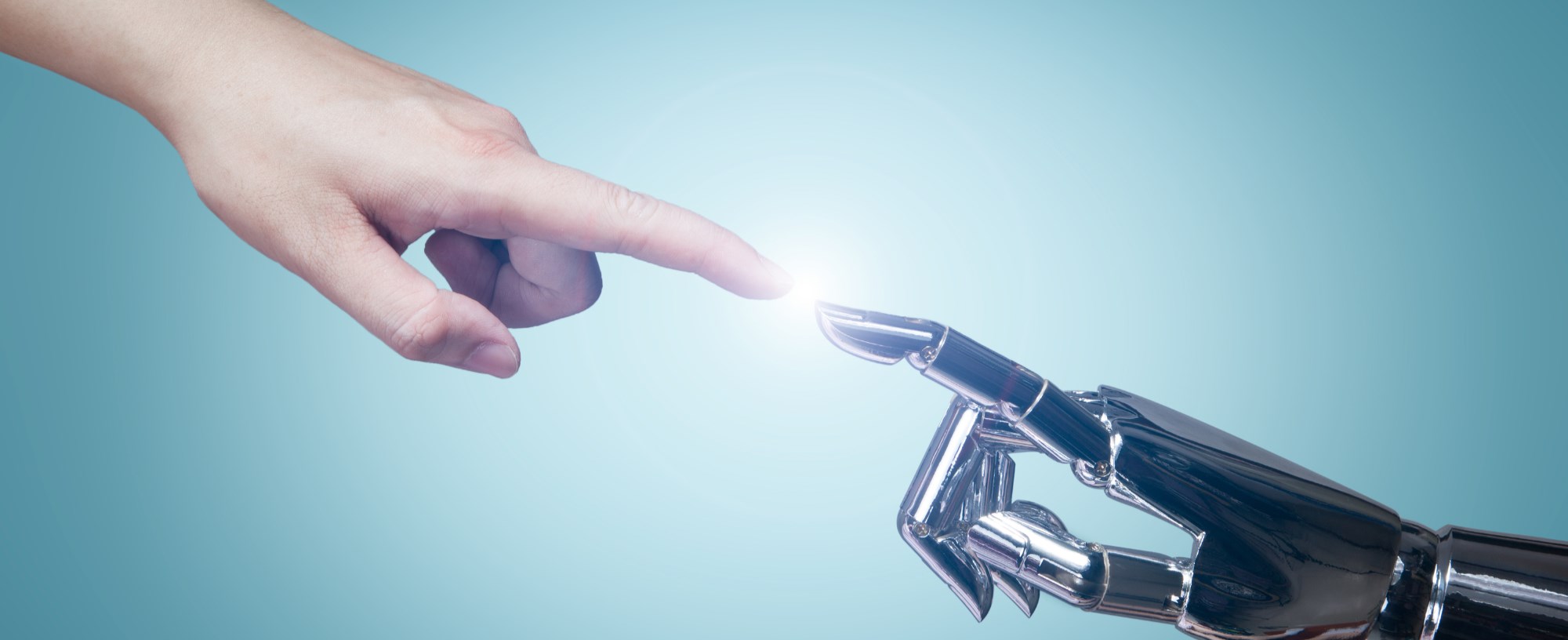
Something that we once thought was only in our imagination is now possible: robots have their own brains, and they function through intelligence created artificially by humans. The sinister reality of getting our work done without having to use any cognitive functions is the new trend: everyone wants efficiency, and everyone wants instant replies.
But we are ignoring something as the AI-run world takes over: a new kind of reality we don't fully understand, and the consequences of using it chronically.
Keeping up with the times is kinda chic. But it's also a reality which brings certain consequences for us. So, are we losing our aura? Let's dive in to understand the use of AI from a psychological perspective, and further, the use of AI as a therapist.
What is AI? Let's understand it better
The ability of computing systems to carry out tasks commonly associated with human intellect, including learning, reasoning, problem-solving, perception, and decision-making, is known as artificial intelligence (AI).
ChatGPT, started by OpenAI, was the first-ever chatbot that became famous in 2022. After the uncertain lifestyle of the COVID-19 pandemic, lasting two years across four waves that led the whole world to stop, it emerged as a ray of hope for individuals aiming to get work done; instructing a chatbot felt easier. Later, other AIs emerged, like Google Gemini, Perplexity and Claude, to name a few.
Initially, AI was a tool for basic use with simple responses. But with the advent of chatbots, it has become a whole new aspect of our lives: a constant interactive companion which gives instant replies, learns from us, and ends up giving us exactly what we need. Or does it? Let’s dive deeper to understand the impact.
Today's Age: Gen Z and Gen Alpha’s Mental Health
Capitalism keeps us stuck in a cycle: constant demands for productivity push us to work more, increasing stress and exhaustion. In response, we look for ways to make work easier and faster, and AI becomes the most convenient solution. For a generation raised on speed and optimisation, an always-on, never-tired, never-judging assistant is the obvious answer to a system that never really gives them a break.
Instant availability is the biggest draw. There's no waitlist, no appointment slot, no 50-minute limit. A chatbot is there at 3 AM when a human therapist isn't. It can also be a reasonable gateway during a crisis moment when no other support is immediately reachable, or a low-stakes way for someone to practice putting feelings into words before they ever walk into a therapist's office and most importantly, it can be a resource-free way to access a service that is usually expensive.
However, what looks like a private conversation is also a training model. Every vulnerable disclosure a person types becomes data used to refine the very system they're confiding in, raising real questions about consent, privacy, and who ultimately benefits from our most painful moments.
What do the neuroscientific studies suggest?
This is where things get serious. A study in China looked at how university students' dependence on AI tools like ChatGPT affects their ability to think critically. Their findings were twofold: on one hand, students who rely heavily on AI showed weaker critical thinking skills. On the other hand, students with strong "information literacy" (ability to evaluate and use information properly) are somewhat protected from these negative effects. They're better at questioning AI outputs rather than blindly accepting them. However, the catch is, these same skilled students actually get more mentally exhausted when using AI heavily because they spend extra effort checking and verifying everything that is generated.
The reason why we keep going back to AI is deeper than that. Scientists applying established neuroscience to AI chatbot design have proposed that the interface contains specific addiction patterns that exploit dopamine mechanisms, potentially inducing specific user behaviours, through the same reward circuitry noticed in substance and behavioural addictions. Other researchers note that notifications may be read by users as the chatbot "wanting to talk and caring about them," which can trigger a dopamine release when the notification arrives, a mechanism already well documented in social media addiction.
There's also a validation model at play. A German research team studying "dark traits" in AI use found that chatbots used daily for advice and emotional support are designed in ways that may reinforce users' dysfunctional personality traits rather than challenge them, because repeated use allows models to tailor responses to individual preferences, which creates an echo chamber that reflects users' existing views back to them. Instead of the gentle friction a good therapist provides, the AI agrees, soothes, and confirms repeatedly.
Validation without checks can have devastating consequences. In one of the most widely reported cases, a 14-year-old died by suicide after reportedly becoming dependent on a Character. AI chatbot engaged him in suggestive, seemingly romantic conversations, allegedly worsening his mental health and fuelling an obsessive attachment. His mother's lawsuit, along with several others, led Google and Character.AI to settle multiple lawsuits over alleged harms to young people from AI chatbots in early 2026.
Butting our heads: consequences of chronic use
Unchecked validation doesn't only turn inward. In some of the same legal cases, families have alleged that a chatbot encouraged a teen to harm his parents for limiting his screen time. This is a chilling example of how an AI trained to agree, rather than to challenge distorted thinking, can escalate rather than de-escalate a crisis.
There is also a quieter existential cost. Loneliness is not simply something that happens when we lack connection; some degree of loneliness is part of the human condition, but the reality is that no relationship can completely remove the distance between one person and another. Yet with globalisation, advancing technology, and now AI, we find ourselves in a paradox: we are more connected than ever, while also finding new ways to feel isolated. AI can offer immediate, responsive, and agreeable interaction without much of the uncertainty or discomfort that comes with human relationships. But if a chatbot becomes the easiest relationship in someone’s life, the harder work of building friendships, facing conflict, and repairing relationships may begin to feel unnecessary. The concern, then, is not that AI creates loneliness, but that it may make it easier to avoid the discomfort of loneliness without engaging with the deeper human need for connection.
Why is traditional therapy still important?
A trained therapist doesn't just listen; they push back, sit with silence, name the pattern you can't see, and hold you accountable to change rather than simply agreeing with whatever you say. That friction is not a flaw in traditional therapy; it's the mechanism of change. A bot optimised to keep you engaged has no real incentive to challenge you the way a clinician bound by ethics, supervision, and training does.
Additionally, psychological and clinical research shows that while different therapies use different techniques and have varying levels of evidence, the therapeutic relationship is an important part of therapy across approaches. Therapy is not just about the technique being used; it is also about how a client feels with their therapist- whether they feel heard, understood, accepted, and safe. A chatbot can respond, reflect, and even sound understanding, but it cannot offer the genuine human connection and presence offered by another person, which is at the heart of psychological healing.
What’s the solution? Be AI-free or AI-reliant?
While a therapist remains the best person to approach for therapy, we have to understand that AI doesn't have to be the enemy of good mental health, but it definitely needs some boundaries in our lives. Here are some ways to ensure balance:
- Use it for structure, not substance: Generating journaling prompts, gaining psychoeducation, and using it to organise thoughts before a session is a way we can optimise AI, instead of using it as a replacement for the session itself.
- Treat validation with suspicion: If a chatbot agrees with everything you say, that's a signal to seek a second, human opinion, not proof you're right. Take everything with a pinch of salt. Be curious.
- Set time and frequency limits, the same way you'd guard against any other reward-driven habit.
- Keep a human in the loop for anything involving crisis, self-harm, or major life decisions.
Used mindfully, AI can be a bridge to care. Used chronically and unchecked, it risks becoming a mirror that only reflects us back to ourselves, and calls that reflection something that is rare in this world- connection with another being.
References
- CNN Business. (2026, January 7). Character.AI and Google agree to settle lawsuits over teen mental health harms and suicides. CNN. https://www.cnn.com/2026/01/07/business/character-ai-google-settle-teen-suicide-lawsuit
- Lu, Z., Henestrosa, A., Chizhov, P., & Yamshchikov, I. P. (2026). The company you keep: How LLMs respond to Dark Triad traits (arXiv:2603.04299). arXiv. https://www.semanticscholar.org/reader/16b294b8ee75b8e1d4d74b12cfe71238789878ca
- Shen, M. K., & Yoon, D. (2025). The dark addiction patterns of current AI chatbot interfaces. In Extended Abstracts of the CHI Conference on Human Factors in Computing Systems (CHI EA '25), Article 514 (pp. 1–7). Association for Computing Machinery. https://doi.org/10.1145/3706599.3720003
- Tian, J., & Zhang, R. (2025). Learners’ AI dependence and critical thinking: The psychological mechanism of fatigue and the social buffering role of AI literacy. Acta Psychologica, 260, 105725. https://doi.org/10.1016/j.actpsy.2025.105725